
In this blog post, I am honored and thrilled to share conversations I had with two of the sports world’s most successful people. I had two separate conversations: one with longtime Los Angeles Times sports columnist Bill Plaschke, and another with former SportsCenter Los Angeles anchor Neil Everett. Both of them shared their perspectives on the complex world of NIL.
Bill Plaschke:
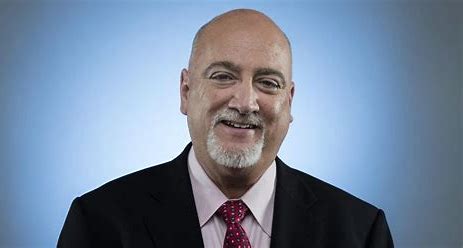
Bill Plaschke is a well-known sports columnist for the Los Angeles Times. He has also been a panelist on ESPN’s Around the Horn, a talk show where they discuss a variety of topics within the sports world.
In my conversation with Bill Plaschke, he shared his thoughts on NIL. He stated, “NIL is great for the athlete, bad for the sport,” adding, “It has turned the college sports world into professional sports.” He expressed the belief that there should be a salary cap, just like in professional sports. This, he argued, would help keep college sports fun and entertaining. It would also level the playing field for smaller teams that are trying to compete with the big dogs in NIL.
“NIL is the necessary evil,” Plaschke said, stating that it’s something student-athletes deserve given the money they generate for their universities. These college kids give their time and hard work to athletics, so they should get something in return. Plaschke continued, “There needs to be a player union. Take a look at the NBA players’ union and see what you can take from their book.” He also emphasized that more legislation is needed to prevent the NIL world from getting even more out of hand.
Plaschke stressed how important it is to make NIL stricter, explaining that this would also help protect a school’s investment in its players. A kid can sign an NIL deal with a school, then immediately enter the transfer portal—leaving the school’s investment lost. Plaschke is a huge fan of Cinderella stories, especially in the context of the NCAA Men’s Basketball Tournament. He said, “If there is no salary cap, we won’t have those Cinderella stories anymore. That’s the magic of college sports—seeing a 10-seed take down a 4-seed.” In this past tournament, all the No. 1 seeds made it to the Final Four. “College sports are all about Cinderella stories, and that’s what makes college sports magical!” Plaschke concluded at the end of our conversation.
Talking with Bill Plaschke and hearing his opinions on the world of NIL was fascinating, and I’m grateful that he took time out of his busy schedule to sit down and speak with me.
Neil Everett:

I also had the privilege of speaking with Neil Everett, a former University of Oregon student and School of Journalism and Communication alumnus. Neil took the skills he gained at Oregon to SportsCenter, where he became a prominent anchor on the SportsCenter team in Los Angeles.
The first question I asked Everett was whether he thinks NIL is a good or bad thing. His response was, “It’s a mixed bag. I think the NCAA rushed it and didn’t think too much about the process of NIL. But it gives the athletes money for all the marketing they are used for by the universities.”I was then curious to know where he thinks NIL could be improved or what areas of NIL are working well. Everett responded, “It gives the athletes their commission for all the revenue they bring to the university.” However, he also pointed out, “It’s bad right now because there isn’t a system in place to prevent manipulation of endorsements.” He concluded by saying, “Best intentions, not the best execution.”
I then asked Everett if NIL is destroying the magic of college sports that we love. He replied, “It’s not the only thing taking away that magic. Conference realignment, the transfer portal, and NIL together are making college sports less special today.”
Just like Plaschke, Everett is a huge fan of the underdog upsetting a top five seed in March Madness. But with NIL and other factors changing college sports, we might not get many of those Cinderella stories anymore—which is what made the tournament truly madness.
I then asked Everett about the potential need for a salary cap in NIL. His response was, “I wouldn’t trust the NCAA to come up with that. I do think there needs to be some sort of commission or group in place to oversee NIL.”
He added, “If anything, get every athletic director from every Power 5 school and put them into an association that can work together to find solutions that satisfy everyone to the best of their ability.”
For my final question, I focused on high school athletes who are preparing for the NIL landscape. I asked Everett what advice he would give them.
“Hire a financial advisor. Sure, the Range Rover is nice, and that gold chain looks good on you, but put some of that money into investments,” he said. He continued, “Start to think about what you want to do with that money, because you might not earn much in the professional field if your skills decrease or if you get injured.”
Everett ended our conversation by saying, “Jack, I have always found this funny—NIL means nothing, but N.I.L. means anything but nothing.” He found it ironic and amusing that three small dots have completely changed the meaning of a word. Who would have thought that those three dots would also change the entire landscape of college sports for the foreseeable future?
I want to thank both Neil Everett and Bill Plaschke for sitting down and talking with me about NIL. It was informative, and I learned some new things from both of them. NIL is a complex topic and will continue to be for a while, but these sports experts see the good that NIL is doing for these kids who sacrifice their bodies playing for these universities.
 Jack Erskine
Leave a comment