Author: Jack Erskine

  • Beyond the Three Dots: How NIL is Reshaping College Sports—Perspectives from Bill Plaschke and Neil Everett

    Beyond the Three Dots: How NIL is Reshaping College Sports—Perspectives from Bill Plaschke and Neil Everett

    In this blog post, I am honored and thrilled to share conversations I had with two of the sports world’s most successful people. I had two separate conversations: one with longtime Los Angeles Times sports columnist Bill Plaschke, and another with former SportsCenter Los Angeles anchor Neil Everett. Both of them shared their perspectives on the complex world of NIL.

    Bill Plaschke:
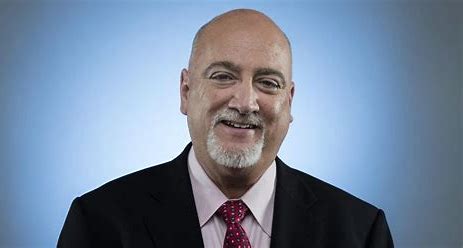
    Bill Plaschke is a well-known sports columnist for the Los Angeles Times. He has also been a panelist on ESPN’s Around the Horn, a talk show where they discuss a variety of topics within the sports world.

    In my conversation with Bill Plaschke, he shared his thoughts on NIL. He stated, “NIL is great for the athlete, bad for the sport,” adding, “It has turned the college sports world into professional sports.” He expressed the belief that there should be a salary cap, just like in professional sports. This, he argued, would help keep college sports fun and entertaining. It would also level the playing field for smaller teams that are trying to compete with the big dogs in NIL.

    “NIL is the necessary evil,” Plaschke said, stating that it’s something student-athletes deserve given the money they generate for their universities. These college kids give their time and hard work to athletics, so they should get something in return. Plaschke continued, “There needs to be a player union. Take a look at the NBA players’ union and see what you can take from their book.” He also emphasized that more legislation is needed to prevent the NIL world from getting even more out of hand.

    Plaschke stressed how important it is to make NIL stricter, explaining that this would also help protect a school’s investment in its players. A kid can sign an NIL deal with a school, then immediately enter the transfer portal—leaving the school’s investment lost. Plaschke is a huge fan of Cinderella stories, especially in the context of the NCAA Men’s Basketball Tournament. He said, “If there is no salary cap, we won’t have those Cinderella stories anymore. That’s the magic of college sports—seeing a 10-seed take down a 4-seed.” In this past tournament, all the No. 1 seeds made it to the Final Four. “College sports are all about Cinderella stories, and that’s what makes college sports magical!” Plaschke concluded at the end of our conversation.

    Talking with Bill Plaschke and hearing his opinions on the world of NIL was fascinating, and I’m grateful that he took time out of his busy schedule to sit down and speak with me.

    Neil Everett:

    I also had the privilege of speaking with Neil Everett, a former University of Oregon student and School of Journalism and Communication alumnus. Neil took the skills he gained at Oregon to SportsCenter, where he became a prominent anchor on the SportsCenter team in Los Angeles.

    The first question I asked Everett was whether he thinks NIL is a good or bad thing. His response was, “It’s a mixed bag. I think the NCAA rushed it and didn’t think too much about the process of NIL. But it gives the athletes money for all the marketing they are used for by the universities.”I was then curious to know where he thinks NIL could be improved or what areas of NIL are working well. Everett responded, “It gives the athletes their commission for all the revenue they bring to the university.” However, he also pointed out, “It’s bad right now because there isn’t a system in place to prevent manipulation of endorsements.” He concluded by saying, “Best intentions, not the best execution.”

    I then asked Everett if NIL is destroying the magic of college sports that we love. He replied, “It’s not the only thing taking away that magic. Conference realignment, the transfer portal, and NIL together are making college sports less special today.”

    Just like Plaschke, Everett is a huge fan of the underdog upsetting a top five seed in March Madness. But with NIL and other factors changing college sports, we might not get many of those Cinderella stories anymore—which is what made the tournament truly madness.

    I then asked Everett about the potential need for a salary cap in NIL. His response was, “I wouldn’t trust the NCAA to come up with that. I do think there needs to be some sort of commission or group in place to oversee NIL.”

    He added, “If anything, get every athletic director from every Power 5 school and put them into an association that can work together to find solutions that satisfy everyone to the best of their ability.”

    For my final question, I focused on high school athletes who are preparing for the NIL landscape. I asked Everett what advice he would give them.

    “Hire a financial advisor. Sure, the Range Rover is nice, and that gold chain looks good on you, but put some of that money into investments,” he said. He continued, “Start to think about what you want to do with that money, because you might not earn much in the professional field if your skills decrease or if you get injured.”

    Everett ended our conversation by saying, “Jack, I have always found this funny—NIL means nothing, but N.I.L. means anything but nothing.” He found it ironic and amusing that three small dots have completely changed the meaning of a word. Who would have thought that those three dots would also change the entire landscape of college sports for the foreseeable future?

    I want to thank both Neil Everett and Bill Plaschke for sitting down and talking with me about NIL. It was informative, and I learned some new things from both of them. NIL is a complex topic and will continue to be for a while, but these sports experts see the good that NIL is doing for these kids who sacrifice their bodies playing for these universities.


  • NIL 101: How Do You Get an NIL Deal

    NIL 101: How Do You Get an NIL Deal

    Over the past few weeks, I’ve covered several topics related to NIL. For this blog, I want to break down the key steps athletes should follow to successfully navigate the often-confusing world of NIL.


    Step 1: Prepare for NIL Deals

    As I mentioned in a previous blog post, “What Makes an Athlete Marketable?”, building a strong personal brand is essential. Before even thinking about NIL opportunities, athletes should focus on establishing their brand on social media.

    Show that you’re a hardworking, motivated individual with a positive image, but don’t be afraid to let your true personality shine through. Authenticity resonates with audiences—and brands are looking for athletes who are relatable and real.

    Once you’ve established a brand, you’re proud of, it’s time to create an NIL strategy. Develop a roadmap that outlines your goals, identifies your target audience, and estimates potential income streams. This process will help you determine what types of NIL deals best align with your personal brand. For example, would a partnership with Bass Pro Shops or an energy drink company like Alani suit you best?

    Finally, you’ll want to assemble a team of professionals—agents, attorneys, and possibly marketing firms—who can guide you safely through the NIL landscape. Ask coaches and teammates about references for attorneys and agents. Your agent will handle much of the off-the-field work so you can focus on excelling in your sport. Your attorney will protect your interests by reviewing contracts and ensuring compliance with NCAA rules and regulations.


    Step 2: Operate Your NIL Business

    Once you’ve laid the groundwork, it’s time to evaluate NIL offers carefully. Don’t just focus on the financial side—think about how a partnership might impact your audience. Will your followers be excited, annoyed, or indifferent about a particular brand? Could a deal cost you followers in the long run? These are important questions to consider beyond immediate financial gain.

    With your agent and attorney, review the terms of any NIL agreement thoroughly. Ensure the compensation and contract length meet your expectations and serve your long-term goals. Always read the fine print. For many athletes, these deals are the first contracts they’ve ever signed—so it’s critical to understand exactly what you’re agreeing to.

    Most importantly, make sure the NIL deal complies with NCAA rules to avoid jeopardizing your eligibility. That’s why having a trustworthy attorney is so important—someone who has your back and your best interests at heart.


    Step 3: Master Your Finances

    Once you’ve secured NIL deals that align with your brand and audience, it’s time to focus on the financial side of things. Even with an attorney and marketing team supporting you, it’s important to educate yourself about personal finance and budgeting.

    Understanding how to manage your NIL earnings wisely can set you up for long-term success. After all, as much as you love your sport, you won’t be able to play it forever. That’s why it’s essential to think beyond your athletic career.

    Set long-term goals and develop a plan to continue growing your personal brand—even after you’re playing days are over. NIL is not just about short-term gains; it’s an opportunity to build a foundation for your future. Consider getting a financial advisor to help get you through.


    The world of NIL can be overwhelming, filled with new terminology and challenges. But by following these steps, you’ll be better equipped to navigate the NIL landscape confidently. NIL is a privilege for today’s student-athletes, and it’s an opportunity that should be embraced and maximized. Be careful and always remember, your personal brand is just as important as how you play on Saturdays.

    Links: https://www.nilnetwork.com/nil-deal-101/

  • Know Your Market: Top Brand Categories Dominating NIL Deals

    Know Your Market: Top Brand Categories Dominating NIL Deals

    In this blog post, I’ll break down an infographic that highlights the top brand categories within the NIL space. It shows which types of brands are most commonly partnering with student-athletes.

    infographic from Student-Athlete Insights written by Bill Carter

    Breaking It Down:

    This infographic does a great job of showing which brand categories are dominating the NIL game. It’s no surprise that apparel and footwear lead the way, with 20% of athletes signing deals in that category. With Nike being one of the most recognized names in sports and activewear, this makes a lot of sense.

    One thing I didn’t expect was to see automotive brands among the top 11 categories. When I think of car commercials, I usually picture professional athletes—not college athletes.

    Another surprise was tech, sitting at 13%. I found that interesting because I don’t often see student-athletes featured in tech ads or commercials. On the other hand, the 14% share for restaurants immediately made me think about how smart it would be for local college-town restaurants to collaborate with star athletes. If you’re a non-chain restaurant near a college campus, why not team up with a player from the softball or baseball team to promote a signature dish?

    One point of confusion for me was the distinction between “food” and “restaurants” on the chart. My best guess is that “food” includes packaged products like protein bars, while “restaurants” refers to dining establishments. Still, that division wasn’t immediately clear. And if you’re like me and wondered what “CPG” means—it stands for Consumer Packaged Goods. This category includes frequently purchased items like cleaning products, toiletries, and cosmetics.

    What Would I Change:

    Overall, this is a strong infographic that effectively breaks down the brand categories leading in NIL deals. That said, there are a few changes I’d make to improve it.

    First, I would add a key with examples for each category. Clarifying the difference between “food” and “restaurants,” for example, would help readers better understand the data and what those partnerships might look like.

    Second, I’d simplify the color scheme. Using too many similar or overlapping colors makes the chart harder to interpret. Why are both apparel and beverages represented in blue, when they’re entirely different categories? Assigning distinct colors to each brand category would make the data easier to digest at a glance.

    If you want to check out the original article and infographic, you can visit the link below. It includes more great insights on the current NIL landscape.

    Link: https://studentathleteinsights.com/blog/seven-data-points-that-will-tell-the-story-of-nil-in-2023

  • Reggie Bush Was Ahead of His Time: How NIL Could Have Changed Everything

    Reggie Bush Was Ahead of His Time: How NIL Could Have Changed Everything

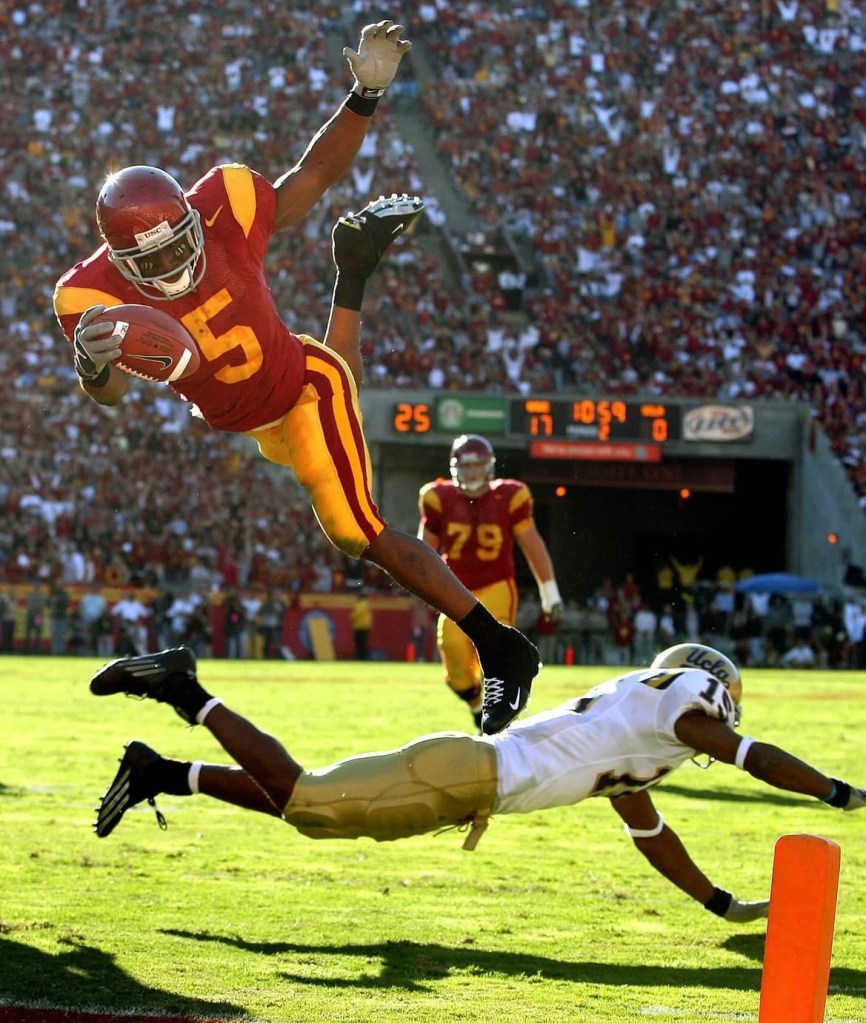
    There are always “what if” questions in the sports world. So, what if NIL was a thing during Reggie Bush’s career? Reggie Bush was a football star at USC and won the 2005 Heisman Trophy winner. The Heisman Trophy goes to the best football player in college. Normally for Wide receivers, running backs or quarterbacks.

    What Happened?

    In 2010, the NCAA imposed sanctions on USC after finding out some illegal behavior. Bush received improper benefits from sports agents, which included cash, travel expenses, and a rent-free home. This did not just hurt Bush, it also hurt the USC football program, which was handed a two-year postseason ban and a reduction in scholarships. Bush also had his Heisman Trophy forfeited because of what the NCAA discovered.

    Screenshot from USC Football Instagram

    Reinstates of Heisman Trophy

    April 2024, The Heisman Trust gave Bush back his 2005 Heisman Trophy back because of “enormous changes in college athletics,” according to People magazine. Was the new NIL era to thank? Potentially, what Bush was found guilty of doing back in his playing days at USC was at the time illegal. But if Bush was in the sport now, it would have been perfectly okay.

    Even with his reinstated Heisman Trophy, Bush is still filling lawsuits against the NCAA, USC, and the Pac-12 Conference. The latest lawsuit was filed in September 2024, and is for compensation for his name, image, and likeness while playing at USC. He claims that these entities profited from his image, and he did not get any compensation from it.

    Screenshot of Reggie Bush Heisman Trophy via Reggie Bush Instagram

    Bush in the NIL Era

    It is fair to say that when Bush was playing at USC, these actions were illegal. But NIL now is in effect, so no one has to go through what Bush or USC did. Bush would have been the Arch Manning of his time in terms of NIL earnings. Manning’s NIL is estimated at around $6.6 million, according to On3.com. Bush would have been pushing that with the talent and the branding he had off the field. It is without any doubt that Bush would have been one of the top names on the earnings list for NIL.

    His electric highlight-reel runs, and his breakaway speed at USC was much-watch TV. His dominance on the field helped USC win two National Championships in 2003 and 2004 seasons. With that winning on the field it showed that he could help any brand win as well off the field. His media savvy was ideal for brands looking for a partnership. Playing in Los Angeles also helped. Bush appeared in commercials, magazines, and attended celebrity events before going to the NFL.

    These qualities would have translated to a one-of-a-kind NIL package if he was playing football today. Arch Manning and Shedeur Sanders are making 4 to 6 million dollars in NIL. Those guys are good athletes, but nowhere near as exciting as what Reggie Bush did on the field. His game was much more elite than both of those guys. Then you add the fact that he played at USC during peak national dominance, winning two National Championships. You could estimate that Bush would probably make at least 15 million if he stayed 3 years at USC. That is nowhere near what anyone in today’s college football world is making.

    Reggie Bush and NIL as a couple is sadly something we did not see, at least legally. But the NIL dominance Bush would have had is always going to be a “What if?” It’s Something we just have to sit and dream about.

    Links: https://nypost.com/2024/03/02/sports/johnny-manziel-wont-attend-heisman-ceremony-until-reggie-bush-gets-trophy-back/?utm

    https://people.com/reggie-bush-recallsfighting-thoughts-of-suicide-before-being-drafted-by-new-orleans-saints-8639427?utm_

  • From One-and- Done to Stay-and-Paid: NIL’s Impact on Athlete Decisions

    From One-and- Done to Stay-and-Paid: NIL’s Impact on Athlete Decisions

    You often hear about athletes like Kobe Bryant skipping college entirely and going straight to the NBA. But now, with the introduction of NIL that mindset is starting to change. Today, many college athletes are rethinking their approach to college, especially since the majority of them won’t be drafted in the first or second round—where the big money is. Once you fall beyond the third round, you’re no longer signing a multi-million-dollar contract.

    According to Sportskeeda, NFL salaries for players selected in the fifth round range from approximately $670,000 to $700,000. The pay decreases the later you’re drafted. By the seventh round, players are estimated to earn between $630,000 and $640,000—and only athletes selected in the first four rounds are guaranteed a contract. As a result, many college athletes who aren’t projected to go high in the draft choose to stay in school and continue earning through NIL opportunities.

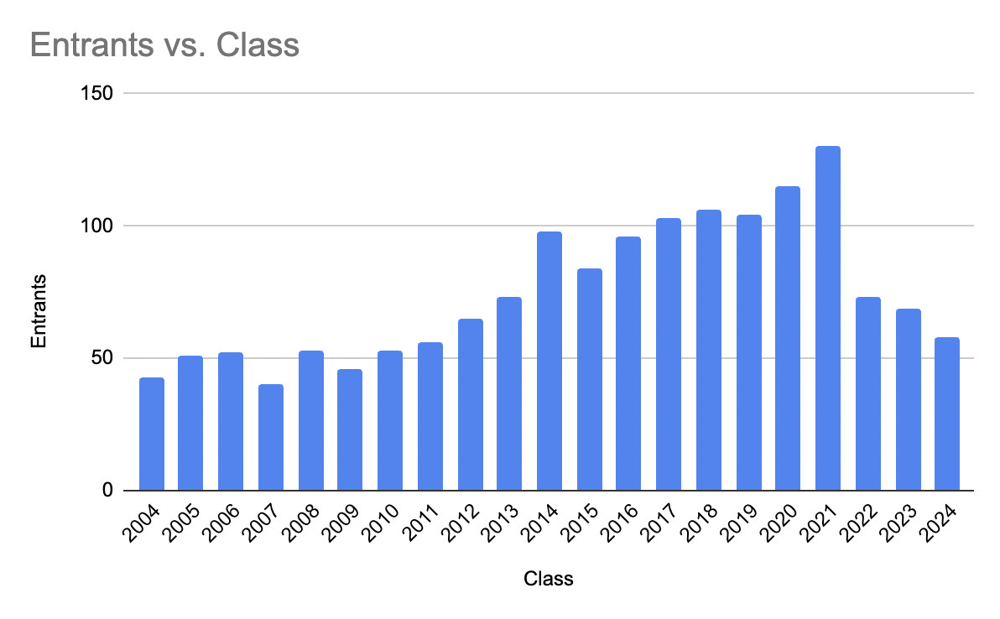
    Before NIL, around 128 underclassmen would declare for the NFL Draft each year. In the 2024 draft, however, only 58 underclassmen declared. The rest opted to stay in college to boost their draft stock and take advantage of their NIL deals. The chart below illustrates this trend in early entrants (college athletes declaring for the draft early) by year.

    As shown, the number of early draft entrants remained consistent until 2021—the year NIL was introduced. Since then, fewer and fewer athletes are rushing to go pro, especially when they can earn more from NIL deals than they would from a $640,000 contract.

    Some athletes have taken full advantage of this extended window. One well-known example is University of Miami tight end Cam McCormick. He’s played nine years of college football, made possible by injuries and the COVID-19 eligibility waiver. While the full details of his NIL earnings aren’t public, he offers personalized services on the Opendorse platform, including shoutouts, appearances, and autographs.

    Cam McCormick via his Instagram

    Since NIL went into effect in 2021, there has been a steady decline in underclassmen declaring early across all sports—including football, men’s basketball, and women’s basketball. NIL is changing college athletics in many ways, but this may be the most impactful. It doesn’t just affect college programs—it also alters the professional landscape. With fewer new faces entering the NBA or WNBA drafts, those leagues are seeing older rosters and, in some cases, declining viewership. Fewer young stars mean it’s harder to market fresh talent and maintain excitement around the league. Ever since 2021 when NIL was first put into effect, there has been a steady decline of

    So, is this a good thing? I think it is a good thing. It is good that athletes are staying in college longer and getting more education out of it. Meaning, that they will be more flexible if they have career ending injuries. I think it is also good because of the players also becoming more developed. Both on and off the field, once they go pro, they will be able to handle adversity better since they are older and more mature. That would make it easier for the league and teams PR team not having to really coach them up about public image and hopefully does not do anything too bad where they need to cover it up.

    #stayingandpaid

    Links: https://www.yahoo.com/news/nil-side-benefit-players-staying-030000341.html?guccounter=1&guce_referrer=aHR0cHM6Ly93d3cuYmluZy5jb20v&guce_referrer_sig=AQAAABi1SikFIKKfXqgiHqks3Gr1TPzXxm_EAAPWrFYMGwTnzKFxP4QTMvlzgEtt63Wx8JcqGhbozWIhOtvVe7Gx6707iSon-bNKdTQv2fXLoDXJ8oD_CvqayoLgaKovOjkDbSNt_5HZ1aYD5PbbQCtH5RQW_kncv5zF5fpVl5X7Vzai

    https://www.si.com/fannation/name-image-likeness/nil-news/nba-draft-early-entrants-drop-amid-nil-boom-end-covid-waivers#:~:text=For%20many%2C%20staying%20in%20school,guaranteed%20NBA%20deal

  • What Makes an Athlete Marketable? The Role of PR in NIL Success

    What Makes an Athlete Marketable? The Role of PR in NIL Success

    Last week I talked about brands and the athletes that they sign to an NIL contract. But what exactly makes an athlete marketable to a brand? Today we are going to discuss how public relations plays a critical role in the NIL game.

    Athletes have their own way of branding themselves. You see some athletes that post every day on their social media. Where some athletes post a little less frequently. You see some athletes dancing on TikTok even. Whatever their idea of branding is, that is what makes them stand out from the other thousands of athletes in collegiate sports. Let’s take a look and see how athletes brand themselves and what NIL deals that have generated.

    Bo Nix: the former Quarterback for University of Oregon. His NIL deals consist of Milo’s Tea, The Duck Store (Oregon’s student bookstore), and Bojangles. Bo Nix growing up in the South brought his southern charm to Eugene when he transferred from Auburn. His faith leading him through his college career and his down-to-earth charm made it easy for brands to sign him. He also has a very family-oriented image that makes him likeable to others. All of these are reasons why Bo Nix has a good public image and also makes him quite easy to market for brands.

    Haley and Hanna Cavinder: Women’s basketball stars at University of Miami. Their social media presence has helped them land some big-time partnerships with brands. Boost Mobile, WWE, and Champs Sports to just name a few have partnered up with the Cavinder twins. With their massive presence on TikTok and their media savvy personalities they have gained a large following. Their PR impact is they capitalized super early on NIL by branding their strong sister bond that helped them target deals that are similar to their lifestyle.

    Jaden Rashada: Quarterback at University of Georgia. The Georgia Quarterback has an interesting past with NIL deals since he cancelled a 13-million-dollar Florida and committed to ASU instead. But he has been rebuilding his endorsement paths and has gained some solid partnerships with brands, such as Leaf Trading Cards. Even with Jaden’s past why is he still marketable you might be asking? He has become a huge talking point when it comes to NIL. After his deal with Florida fell through, he used interviews to show transparency and helped reshape the narrative around him. He has rebuilt his reputation through staying transparent, and the public sympathy has helped give him a second wave.

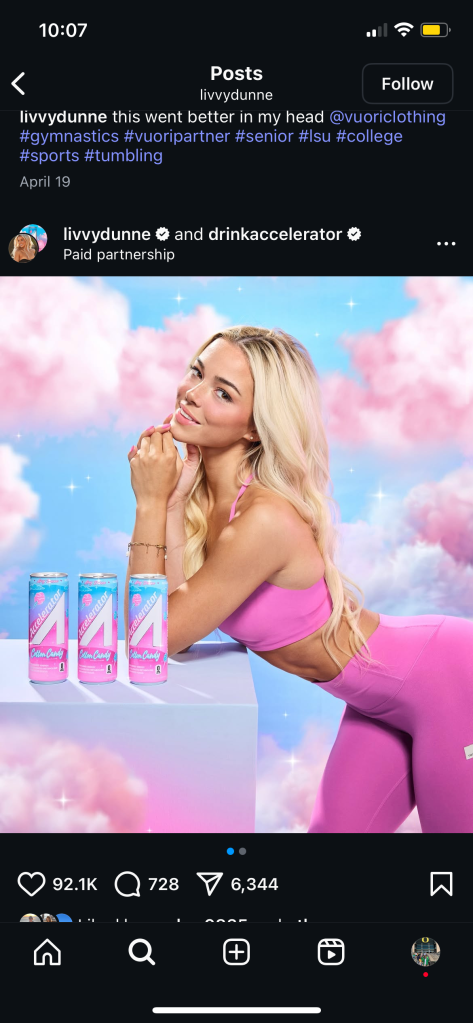
    Livvy Dunne: Gymnast at LSU. An LSU gymnast that has also taken over the NIL and college world. Her personality has helped her gain a massive following on social media and that has attracted multiple brand deals for her. Some of those include BodyArmor, Vuori, and American Eagle. She is very media trained which comes through with her authenticity and interviews. She is on-brand for the Gen Z culture as she interacts with fans which helps boosts her popularity even more.

    If you were a brand manager which athlete traits, would you prioritize? Would you prioritize someone like Jaden Rashada who is rewriting his story? Or would you pick someone like Bo Nix who brings that southern charm and faith lead lifestyle? No matter what you prioritize, college athletes now are branding themselves just like professional athletes have done for years. Looking at these athletes you see how critical self-branding is. Even if you are not an athlete remember that you’re in control of what you want your brand to be, and your public perception is always something you must think about.

    Links: https://nil.store/blogs/news/the-ultimate-beginner-s-guide-to-starting-a-nil-deal

    https://nozakconsulting.com/branding/how-to-create-a-personal-brand-get-recruited/

  • Swoosh vs Balance: Who’s Winning the NIL Game?

    Swoosh vs Balance: Who’s Winning the NIL Game?

    We have discussed nonprofits that are in the NIL game, but there are powerhouse for-profit companies that are taking over the field of NIL. The two stars are Nike and New Balance. Nike has taken the approach of partnering with high-profile athletes across various sports, mainly focusing on football and basketball. New Balance, on the other hand, is using a more targeted strategy focused on long-term relationships with their athletes. It’s no surprise that these two are the main contributors to NIL deals for athletes.

    Nike has a bunch of talented athletes sponsored by them, but two athletes stand out from their long list. Those two athletes are Shedeur Sanders, the former Colorado Buffaloes quarterback, and Caitlin Clark, the standout women’s basketball star from the University of Iowa.

    New Balance does not lack star power on their list either. Cooper Flagg, the men’s basketball star at Duke, and Cameron Brink from Stanford women’s basketball—who became New Balance’s first women’s basketball ambassador—are two big names.

    Let’s break down each of these four athletes and what they are making from both companies. First, we have Sanders, the flashy Colorado football player making more than many players in the NFL. His NIL profits are next level, and with the help of Nike, he’s earning $5 million from his contract.

    Then we have Caitlin Clark, who took over the women’s basketball scene during her time at Iowa. Her contract with Nike is worth $28 million over an eight-year deal. This makes her one of the highest-paid female athletes in terms of NIL.

    Now we have New Balance, which is also racking up big-name talent. Cooper Flagg is making waves in the college basketball world. He’s talked about as one of the top NBA prospects, but his NIL earnings might keep him in the NCAA a little longer. He signed a structured five-year deal, with the first year operating under NIL terms while he remains in college. That deal is worth a little over $1 million annually. If he goes pro, the total could rise to $5–10 million.

    Cameron Brink became New Balance’s first women’s basketball ambassador back in 2023. The exact details of her contract haven’t been fully released, but it’s estimated to be between $200,000 and $297,000—significantly less than her counterpart Flagg is making. This reflects a trend in NIL deals, which I touched on in my last blog post.

    So, what does all this mean? With brands like Nike and New Balance throwing out million-dollar contracts to 18-year-olds, there’s a possibility that some athletes stay in college longer instead of going straight to the league. In the past, many athletes have been one-and-done or two-and-done in college. This new NIL landscape also gives schools with partnerships with Nike or New Balance a leg up in recruiting.

  • The NIL Playbook: What Sports Are Winning or Losing

    The NIL Playbook: What Sports Are Winning or Losing

    When you think of NIL, you—like most people—probably think of college football players. They’re typically the athletes landing the biggest deals. On average, the top 25 college football players earn around $294,000 annually. In comparison, the average NIL earnings for a top 25 softball player are about $88,000. That means football players earn roughly 34 times more than their softball counterparts. This gap is largely due to how much more revenue football generates for universities.

    College football dominates the landscape of college sports in the United States. No other collegiate sport matches the atmosphere, fan engagement, or media attention football receives. Because of that, football brings in significantly more money to athletic departments. According to ESPN Press Room, college football averaged 5.8 million viewers per game across 46 national broadcasts in 2024. In contrast, softball games on ESPN platforms averaged only 190,000 viewers. The media coverage football receives plays a massive role in driving this difference in exposure and, ultimately, NIL potential.

    Another major factor is star power. Football consistently produces high-profile athletes with massive social media followings. Brands love partnering with players like Travis Hunter, who already have built-in audiences. It reduces the need for additional marketing—these athletes are walking ad campaigns. That kind of reach is much rarer in softball. However, there are exceptions. Texas Tech made headlines by spending $1.2 million on an NIL deal with pitcher NiJaree Canady, making her one of the highest-paid softball players to date.

    If softball wants to close that gap, there are a few things it can focus on. One is boosting athlete branding and social media presence. Encouraging players to consistently post content on platforms like Instagram and TikTok can help build personal brands that are more attractive to sponsors. Another important step is increasing broadcast exposure. Partnering with ESPN to air more games on its main channel—rather than ESPN2 or ESPN+—would bring in more viewers and grow the sport’s fan base. Lastly, enhancing storytelling is key. Highlighting players’ journeys—especially those who have overcome adversity or hardship—can help create emotional connections that draw in both fans and brands.

    Will football continue to lead the way in NIL earnings? Probably. But that doesn’t mean other sports like softball can’t learn from what’s working. With strategic investments in branding, media exposure, and storytelling, softball athletes can position themselves to secure bigger and better NIL deals in the future.

  • Non-profit and NIL

    Non-profit and NIL

    When you think of NIL (Name, Image, and Likeness), you probably picture big brands like Nike, Adidas, or Jersey Mike’s. That’s what most people think of when they hear “NIL.” I was curious, though—are there any nonprofits that focus on NIL and student-athletes? It turns out there aren’t many. In fact, only a few exist. But one really stood out to me: the National NIL Foundation.

    I had never heard of it before, and no one I know had mentioned it either. So I did some research—and I found it to be a really cool, albeit complex, organization. Let’s break it down.

    The National NIL Foundation acts like a middleman between college athletes and charitable causes. It’s a registered 501(c)(3) nonprofit, which means it’s tax-exempt under a specific section of the U.S. Internal Revenue Code. That code designates nonprofits as tax-exempt if they operate for charitable, educational, religious, scientific, or literary purposes. The National NIL Foundation focuses specifically on charitable work.

    This foundation promotes a model of NIL compensation that carries social value. It encourages student-athletes to give back to their communities while still benefiting financially from their NIL opportunities. That’s exactly why I admire this foundation.

    I’m someone who believes that if you have the means to help others—especially those in struggling situations—you should. Here’s an example of how the National NIL Foundation operates: Let’s say a nonprofit at University X wants to compensate a student-athlete for volunteering with a local charity. The National NIL Foundation steps in to help by assisting in designing the program, providing funding to pay the athlete, and reviewing the activity to ensure it qualifies as charitable work. That’s a concept I believe every college athlete should embrace.

    This is an incredible foundation because it shifts the focus away from just landing massive endorsement deals. Instead, it encourages athletes to look outside of their college bubble and give back to the communities that support them. In college towns like Eugene, there are countless opportunities for athletes to help those in need—while still benefiting from NIL deals.

    If more athletes took this approach, I think the national perception of NIL would begin to shift. Rather than chasing only the biggest brands like Nike or Adidas, athletes could make a real impact by helping the people around them. They could give back to the same communities that pack the stands and cheer them on.

    We need more college athletes to think about the people who support them—and find meaningful ways to give back.

    Here is the link to the National NIL Foundation https://nilfoundation.org/

  • The Pros and Cons of NIL

    The Pros and Cons of NIL

    In this new era of college athletics shaped by NIL (Name, Image, and Likeness), there’s a great deal of skepticism surrounding its impact. Many college coaches have voiced strong opinions on how NIL can either benefit or harm college sports—and a lot of what they’ve said makes total sense. One common concern is the competitive imbalance created when universities have access to high-profile alumni, such as the University of Oregon with Nike co-founder Phil Knight.

    Below is a breakdown of the pros and cons of NIL, along with explanations of why each point is seen as either a benefit or a drawback:

    Pros:

    • Financial Compensation: NIL gives student-athletes the chance to earn money when their university markets them or when they secure deals independently. This can be especially impactful for students from underprivileged backgrounds, providing financial support and easing the cost of living while attending college.
    • Brand Building: Learning to build a personal brand is a valuable skill—not only for athletes but for any college student. Developing a personal identity and voice early can lead to long-term career opportunities, especially for athletes whose playing careers may be cut short.
    • Business and Life Skills: NIL introduces student-athletes to real-world experiences like contract negotiation, tax filing, and financial literacy. This early exposure can be critical, especially as athletes prepare for professional careers where financial decisions carry high stakes.
    • Opportunities Beyond Sports: Most college athletes won’t turn professional in their sport. NIL allows them to benefit financially during their college years, potentially easing student debt and helping them launch careers in other fields with financial stability.
    • Support for Families: For athletes who do not receive full-ride scholarships, NIL offers an alternative financial path. Even with smaller scholarships, student-athletes can still afford college through NIL income, reducing financial burdens on their families.

    Cons:

    • Unequal Opportunities: The majority of major NIL deals go to football and men’s basketball players. While standout athletes in other sports sometimes land strong deals, most are not in the same position.
    • Increased Pressure: NIL deals often imply a level of star status, which can put extra pressure on athletes to perform both athletically and academically.
    • Short-Term Focus: With some NIL deals worth hundreds of thousands—or even millions—of dollars, there’s a concern that some athletes might prioritize quick money over long-term goals like education.
    • Locker Room Tensions: When one player earns significantly more than others, it can create resentment or tension within a team.
    • Risk of Exploitation: Many haven’t signed contracts before or navigated legal terms. Without the right advisors or legal counsel, they’re at risk of being taken advantage of by agents, sponsors, or companies.

    These are just a few of the many pros and cons associated with NIL. The wide range of perspectives on the issue highlights how complex and evolving this topic really is. Still, one thing is clear: NIL has permanently altered the landscape of college sports.

    Eighteen-year-old athletes can now earn money in ways that weren’t possible—or legal—when stars like Reggie Bush were in college. NIL is no longer just a headline; it’s part of the everyday conversation in college athletics. And it’s here to stay.