Tag: basketball

  • From One-and- Done to Stay-and-Paid: NIL’s Impact on Athlete Decisions

    From One-and- Done to Stay-and-Paid: NIL’s Impact on Athlete Decisions

    You often hear about athletes like Kobe Bryant skipping college entirely and going straight to the NBA. But now, with the introduction of NIL that mindset is starting to change. Today, many college athletes are rethinking their approach to college, especially since the majority of them won’t be drafted in the first or second round—where the big money is. Once you fall beyond the third round, you’re no longer signing a multi-million-dollar contract.

    According to Sportskeeda, NFL salaries for players selected in the fifth round range from approximately $670,000 to $700,000. The pay decreases the later you’re drafted. By the seventh round, players are estimated to earn between $630,000 and $640,000—and only athletes selected in the first four rounds are guaranteed a contract. As a result, many college athletes who aren’t projected to go high in the draft choose to stay in school and continue earning through NIL opportunities.

    Before NIL, around 128 underclassmen would declare for the NFL Draft each year. In the 2024 draft, however, only 58 underclassmen declared. The rest opted to stay in college to boost their draft stock and take advantage of their NIL deals. The chart below illustrates this trend in early entrants (college athletes declaring for the draft early) by year.
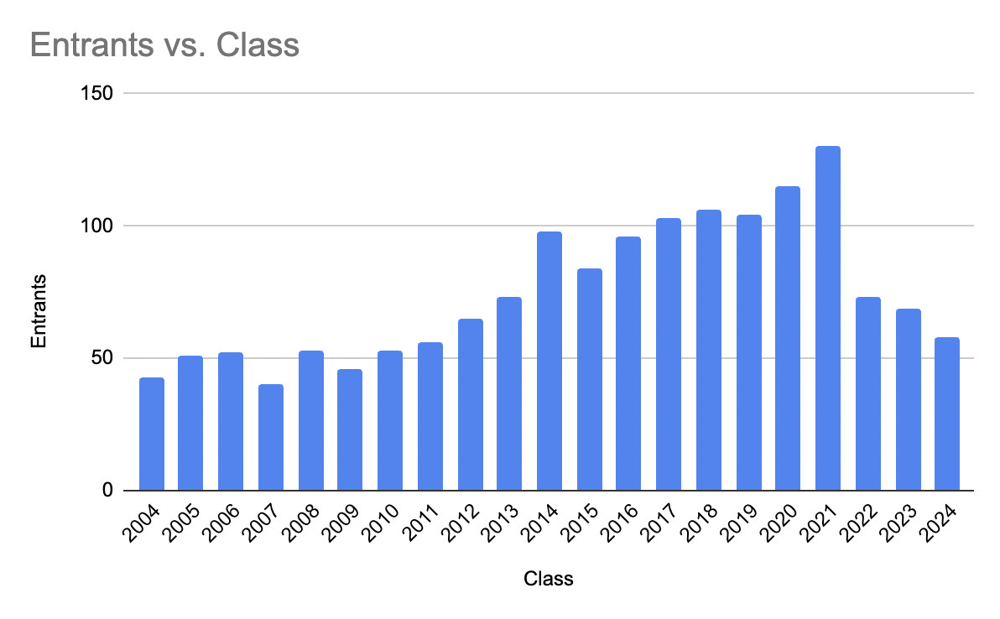
    As shown, the number of early draft entrants remained consistent until 2021—the year NIL was introduced. Since then, fewer and fewer athletes are rushing to go pro, especially when they can earn more from NIL deals than they would from a $640,000 contract.

    Some athletes have taken full advantage of this extended window. One well-known example is University of Miami tight end Cam McCormick. He’s played nine years of college football, made possible by injuries and the COVID-19 eligibility waiver. While the full details of his NIL earnings aren’t public, he offers personalized services on the Opendorse platform, including shoutouts, appearances, and autographs.

    Cam McCormick via his Instagram

    Since NIL went into effect in 2021, there has been a steady decline in underclassmen declaring early across all sports—including football, men’s basketball, and women’s basketball. NIL is changing college athletics in many ways, but this may be the most impactful. It doesn’t just affect college programs—it also alters the professional landscape. With fewer new faces entering the NBA or WNBA drafts, those leagues are seeing older rosters and, in some cases, declining viewership. Fewer young stars mean it’s harder to market fresh talent and maintain excitement around the league. Ever since 2021 when NIL was first put into effect, there has been a steady decline of

    So, is this a good thing? I think it is a good thing. It is good that athletes are staying in college longer and getting more education out of it. Meaning, that they will be more flexible if they have career ending injuries. I think it is also good because of the players also becoming more developed. Both on and off the field, once they go pro, they will be able to handle adversity better since they are older and more mature. That would make it easier for the league and teams PR team not having to really coach them up about public image and hopefully does not do anything too bad where they need to cover it up.

    #stayingandpaid

    Links: https://www.yahoo.com/news/nil-side-benefit-players-staying-030000341.html?guccounter=1&guce_referrer=aHR0cHM6Ly93d3cuYmluZy5jb20v&guce_referrer_sig=AQAAABi1SikFIKKfXqgiHqks3Gr1TPzXxm_EAAPWrFYMGwTnzKFxP4QTMvlzgEtt63Wx8JcqGhbozWIhOtvVe7Gx6707iSon-bNKdTQv2fXLoDXJ8oD_CvqayoLgaKovOjkDbSNt_5HZ1aYD5PbbQCtH5RQW_kncv5zF5fpVl5X7Vzai

    https://www.si.com/fannation/name-image-likeness/nil-news/nba-draft-early-entrants-drop-amid-nil-boom-end-covid-waivers#:~:text=For%20many%2C%20staying%20in%20school,guaranteed%20NBA%20deal

  • Swoosh vs Balance: Who’s Winning the NIL Game?

    Swoosh vs Balance: Who’s Winning the NIL Game?

    We have discussed nonprofits that are in the NIL game, but there are powerhouse for-profit companies that are taking over the field of NIL. The two stars are Nike and New Balance. Nike has taken the approach of partnering with high-profile athletes across various sports, mainly focusing on football and basketball. New Balance, on the other hand, is using a more targeted strategy focused on long-term relationships with their athletes. It’s no surprise that these two are the main contributors to NIL deals for athletes.

    Nike has a bunch of talented athletes sponsored by them, but two athletes stand out from their long list. Those two athletes are Shedeur Sanders, the former Colorado Buffaloes quarterback, and Caitlin Clark, the standout women’s basketball star from the University of Iowa.

    New Balance does not lack star power on their list either. Cooper Flagg, the men’s basketball star at Duke, and Cameron Brink from Stanford women’s basketball—who became New Balance’s first women’s basketball ambassador—are two big names.

    Let’s break down each of these four athletes and what they are making from both companies. First, we have Sanders, the flashy Colorado football player making more than many players in the NFL. His NIL profits are next level, and with the help of Nike, he’s earning $5 million from his contract.

    Then we have Caitlin Clark, who took over the women’s basketball scene during her time at Iowa. Her contract with Nike is worth $28 million over an eight-year deal. This makes her one of the highest-paid female athletes in terms of NIL.

    Now we have New Balance, which is also racking up big-name talent. Cooper Flagg is making waves in the college basketball world. He’s talked about as one of the top NBA prospects, but his NIL earnings might keep him in the NCAA a little longer. He signed a structured five-year deal, with the first year operating under NIL terms while he remains in college. That deal is worth a little over $1 million annually. If he goes pro, the total could rise to $5–10 million.

    Cameron Brink became New Balance’s first women’s basketball ambassador back in 2023. The exact details of her contract haven’t been fully released, but it’s estimated to be between $200,000 and $297,000—significantly less than her counterpart Flagg is making. This reflects a trend in NIL deals, which I touched on in my last blog post.

    So, what does all this mean? With brands like Nike and New Balance throwing out million-dollar contracts to 18-year-olds, there’s a possibility that some athletes stay in college longer instead of going straight to the league. In the past, many athletes have been one-and-done or two-and-done in college. This new NIL landscape also gives schools with partnerships with Nike or New Balance a leg up in recruiting.