Tag: sports

  • NIL 101: How Do You Get an NIL Deal

    NIL 101: How Do You Get an NIL Deal

    Over the past few weeks, I’ve covered several topics related to NIL. For this blog, I want to break down the key steps athletes should follow to successfully navigate the often-confusing world of NIL.


    Step 1: Prepare for NIL Deals

    As I mentioned in a previous blog post, “What Makes an Athlete Marketable?”, building a strong personal brand is essential. Before even thinking about NIL opportunities, athletes should focus on establishing their brand on social media.

    Show that you’re a hardworking, motivated individual with a positive image, but don’t be afraid to let your true personality shine through. Authenticity resonates with audiences—and brands are looking for athletes who are relatable and real.

    Once you’ve established a brand, you’re proud of, it’s time to create an NIL strategy. Develop a roadmap that outlines your goals, identifies your target audience, and estimates potential income streams. This process will help you determine what types of NIL deals best align with your personal brand. For example, would a partnership with Bass Pro Shops or an energy drink company like Alani suit you best?

    Finally, you’ll want to assemble a team of professionals—agents, attorneys, and possibly marketing firms—who can guide you safely through the NIL landscape. Ask coaches and teammates about references for attorneys and agents. Your agent will handle much of the off-the-field work so you can focus on excelling in your sport. Your attorney will protect your interests by reviewing contracts and ensuring compliance with NCAA rules and regulations.


    Step 2: Operate Your NIL Business

    Once you’ve laid the groundwork, it’s time to evaluate NIL offers carefully. Don’t just focus on the financial side—think about how a partnership might impact your audience. Will your followers be excited, annoyed, or indifferent about a particular brand? Could a deal cost you followers in the long run? These are important questions to consider beyond immediate financial gain.

    With your agent and attorney, review the terms of any NIL agreement thoroughly. Ensure the compensation and contract length meet your expectations and serve your long-term goals. Always read the fine print. For many athletes, these deals are the first contracts they’ve ever signed—so it’s critical to understand exactly what you’re agreeing to.

    Most importantly, make sure the NIL deal complies with NCAA rules to avoid jeopardizing your eligibility. That’s why having a trustworthy attorney is so important—someone who has your back and your best interests at heart.


    Step 3: Master Your Finances

    Once you’ve secured NIL deals that align with your brand and audience, it’s time to focus on the financial side of things. Even with an attorney and marketing team supporting you, it’s important to educate yourself about personal finance and budgeting.

    Understanding how to manage your NIL earnings wisely can set you up for long-term success. After all, as much as you love your sport, you won’t be able to play it forever. That’s why it’s essential to think beyond your athletic career.

    Set long-term goals and develop a plan to continue growing your personal brand—even after you’re playing days are over. NIL is not just about short-term gains; it’s an opportunity to build a foundation for your future. Consider getting a financial advisor to help get you through.


    The world of NIL can be overwhelming, filled with new terminology and challenges. But by following these steps, you’ll be better equipped to navigate the NIL landscape confidently. NIL is a privilege for today’s student-athletes, and it’s an opportunity that should be embraced and maximized. Be careful and always remember, your personal brand is just as important as how you play on Saturdays.

    Links: https://www.nilnetwork.com/nil-deal-101/

  • Know Your Market: Top Brand Categories Dominating NIL Deals

    Know Your Market: Top Brand Categories Dominating NIL Deals

    In this blog post, I’ll break down an infographic that highlights the top brand categories within the NIL space. It shows which types of brands are most commonly partnering with student-athletes.

    infographic from Student-Athlete Insights written by Bill Carter

    Breaking It Down:

    This infographic does a great job of showing which brand categories are dominating the NIL game. It’s no surprise that apparel and footwear lead the way, with 20% of athletes signing deals in that category. With Nike being one of the most recognized names in sports and activewear, this makes a lot of sense.

    One thing I didn’t expect was to see automotive brands among the top 11 categories. When I think of car commercials, I usually picture professional athletes—not college athletes.

    Another surprise was tech, sitting at 13%. I found that interesting because I don’t often see student-athletes featured in tech ads or commercials. On the other hand, the 14% share for restaurants immediately made me think about how smart it would be for local college-town restaurants to collaborate with star athletes. If you’re a non-chain restaurant near a college campus, why not team up with a player from the softball or baseball team to promote a signature dish?

    One point of confusion for me was the distinction between “food” and “restaurants” on the chart. My best guess is that “food” includes packaged products like protein bars, while “restaurants” refers to dining establishments. Still, that division wasn’t immediately clear. And if you’re like me and wondered what “CPG” means—it stands for Consumer Packaged Goods. This category includes frequently purchased items like cleaning products, toiletries, and cosmetics.

    What Would I Change:

    Overall, this is a strong infographic that effectively breaks down the brand categories leading in NIL deals. That said, there are a few changes I’d make to improve it.

    First, I would add a key with examples for each category. Clarifying the difference between “food” and “restaurants,” for example, would help readers better understand the data and what those partnerships might look like.

    Second, I’d simplify the color scheme. Using too many similar or overlapping colors makes the chart harder to interpret. Why are both apparel and beverages represented in blue, when they’re entirely different categories? Assigning distinct colors to each brand category would make the data easier to digest at a glance.

    If you want to check out the original article and infographic, you can visit the link below. It includes more great insights on the current NIL landscape.

    Link: https://studentathleteinsights.com/blog/seven-data-points-that-will-tell-the-story-of-nil-in-2023

  • Reggie Bush Was Ahead of His Time: How NIL Could Have Changed Everything

    Reggie Bush Was Ahead of His Time: How NIL Could Have Changed Everything

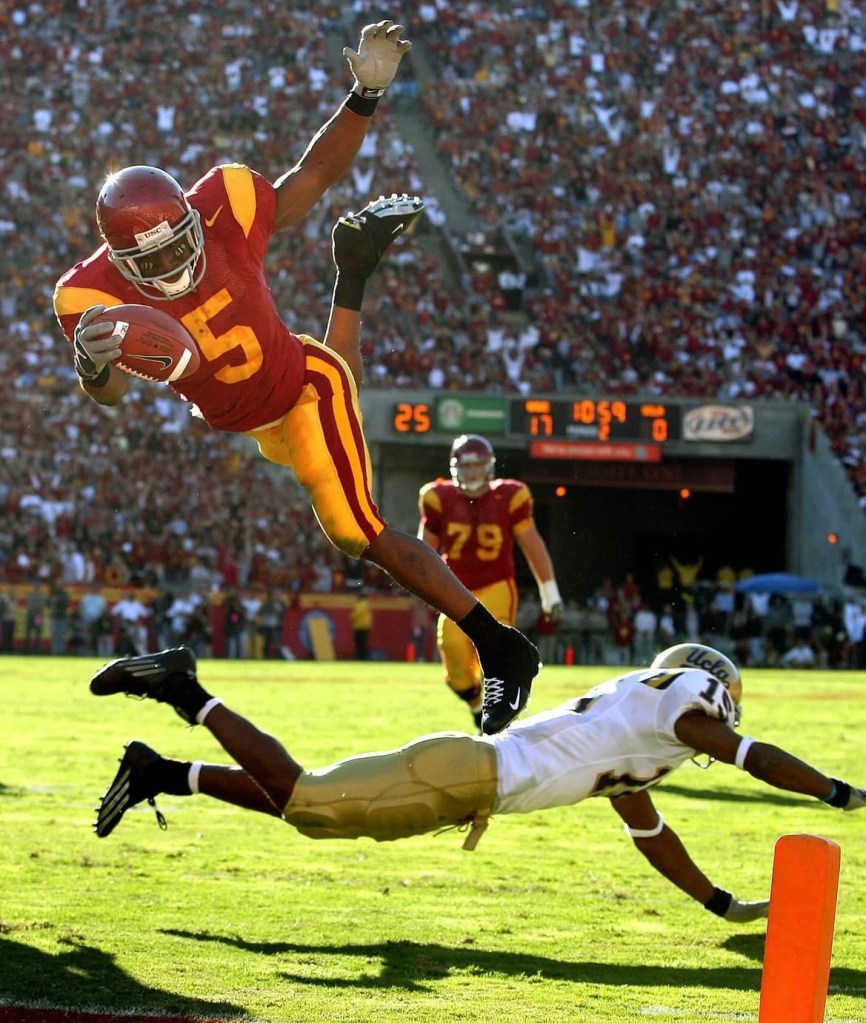
    There are always “what if” questions in the sports world. So, what if NIL was a thing during Reggie Bush’s career? Reggie Bush was a football star at USC and won the 2005 Heisman Trophy winner. The Heisman Trophy goes to the best football player in college. Normally for Wide receivers, running backs or quarterbacks.

    What Happened?

    In 2010, the NCAA imposed sanctions on USC after finding out some illegal behavior. Bush received improper benefits from sports agents, which included cash, travel expenses, and a rent-free home. This did not just hurt Bush, it also hurt the USC football program, which was handed a two-year postseason ban and a reduction in scholarships. Bush also had his Heisman Trophy forfeited because of what the NCAA discovered.

    Screenshot from USC Football Instagram

    Reinstates of Heisman Trophy

    April 2024, The Heisman Trust gave Bush back his 2005 Heisman Trophy back because of “enormous changes in college athletics,” according to People magazine. Was the new NIL era to thank? Potentially, what Bush was found guilty of doing back in his playing days at USC was at the time illegal. But if Bush was in the sport now, it would have been perfectly okay.

    Even with his reinstated Heisman Trophy, Bush is still filling lawsuits against the NCAA, USC, and the Pac-12 Conference. The latest lawsuit was filed in September 2024, and is for compensation for his name, image, and likeness while playing at USC. He claims that these entities profited from his image, and he did not get any compensation from it.

    Screenshot of Reggie Bush Heisman Trophy via Reggie Bush Instagram

    Bush in the NIL Era

    It is fair to say that when Bush was playing at USC, these actions were illegal. But NIL now is in effect, so no one has to go through what Bush or USC did. Bush would have been the Arch Manning of his time in terms of NIL earnings. Manning’s NIL is estimated at around $6.6 million, according to On3.com. Bush would have been pushing that with the talent and the branding he had off the field. It is without any doubt that Bush would have been one of the top names on the earnings list for NIL.

    His electric highlight-reel runs, and his breakaway speed at USC was much-watch TV. His dominance on the field helped USC win two National Championships in 2003 and 2004 seasons. With that winning on the field it showed that he could help any brand win as well off the field. His media savvy was ideal for brands looking for a partnership. Playing in Los Angeles also helped. Bush appeared in commercials, magazines, and attended celebrity events before going to the NFL.

    These qualities would have translated to a one-of-a-kind NIL package if he was playing football today. Arch Manning and Shedeur Sanders are making 4 to 6 million dollars in NIL. Those guys are good athletes, but nowhere near as exciting as what Reggie Bush did on the field. His game was much more elite than both of those guys. Then you add the fact that he played at USC during peak national dominance, winning two National Championships. You could estimate that Bush would probably make at least 15 million if he stayed 3 years at USC. That is nowhere near what anyone in today’s college football world is making.

    Reggie Bush and NIL as a couple is sadly something we did not see, at least legally. But the NIL dominance Bush would have had is always going to be a “What if?” It’s Something we just have to sit and dream about.

    Links: https://nypost.com/2024/03/02/sports/johnny-manziel-wont-attend-heisman-ceremony-until-reggie-bush-gets-trophy-back/?utm

    https://people.com/reggie-bush-recallsfighting-thoughts-of-suicide-before-being-drafted-by-new-orleans-saints-8639427?utm_

  • From One-and- Done to Stay-and-Paid: NIL’s Impact on Athlete Decisions

    From One-and- Done to Stay-and-Paid: NIL’s Impact on Athlete Decisions

    You often hear about athletes like Kobe Bryant skipping college entirely and going straight to the NBA. But now, with the introduction of NIL that mindset is starting to change. Today, many college athletes are rethinking their approach to college, especially since the majority of them won’t be drafted in the first or second round—where the big money is. Once you fall beyond the third round, you’re no longer signing a multi-million-dollar contract.

    According to Sportskeeda, NFL salaries for players selected in the fifth round range from approximately $670,000 to $700,000. The pay decreases the later you’re drafted. By the seventh round, players are estimated to earn between $630,000 and $640,000—and only athletes selected in the first four rounds are guaranteed a contract. As a result, many college athletes who aren’t projected to go high in the draft choose to stay in school and continue earning through NIL opportunities.

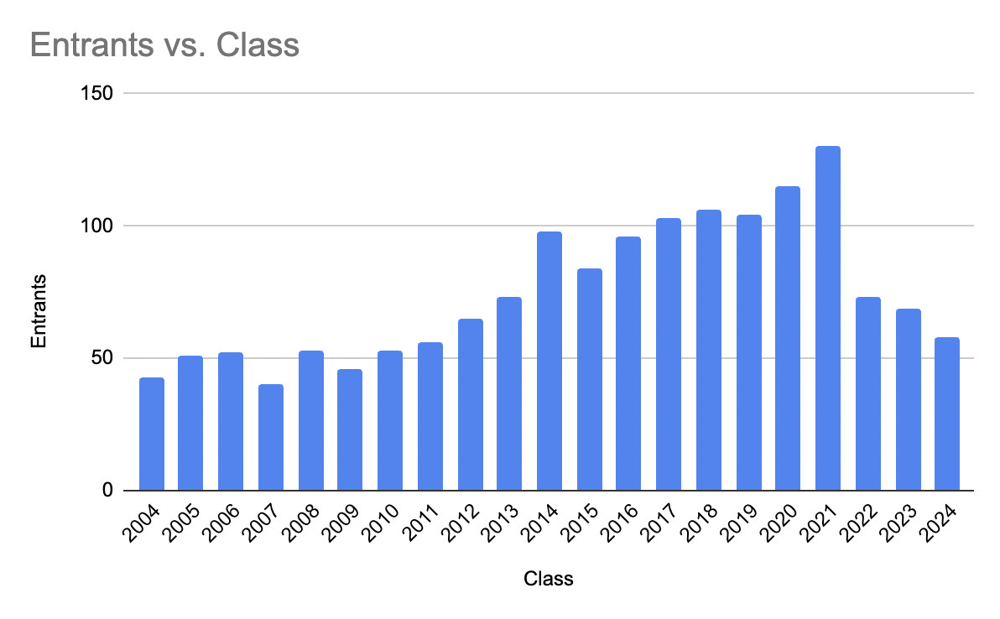
    Before NIL, around 128 underclassmen would declare for the NFL Draft each year. In the 2024 draft, however, only 58 underclassmen declared. The rest opted to stay in college to boost their draft stock and take advantage of their NIL deals. The chart below illustrates this trend in early entrants (college athletes declaring for the draft early) by year.

    As shown, the number of early draft entrants remained consistent until 2021—the year NIL was introduced. Since then, fewer and fewer athletes are rushing to go pro, especially when they can earn more from NIL deals than they would from a $640,000 contract.

    Some athletes have taken full advantage of this extended window. One well-known example is University of Miami tight end Cam McCormick. He’s played nine years of college football, made possible by injuries and the COVID-19 eligibility waiver. While the full details of his NIL earnings aren’t public, he offers personalized services on the Opendorse platform, including shoutouts, appearances, and autographs.

    Cam McCormick via his Instagram

    Since NIL went into effect in 2021, there has been a steady decline in underclassmen declaring early across all sports—including football, men’s basketball, and women’s basketball. NIL is changing college athletics in many ways, but this may be the most impactful. It doesn’t just affect college programs—it also alters the professional landscape. With fewer new faces entering the NBA or WNBA drafts, those leagues are seeing older rosters and, in some cases, declining viewership. Fewer young stars mean it’s harder to market fresh talent and maintain excitement around the league. Ever since 2021 when NIL was first put into effect, there has been a steady decline of

    So, is this a good thing? I think it is a good thing. It is good that athletes are staying in college longer and getting more education out of it. Meaning, that they will be more flexible if they have career ending injuries. I think it is also good because of the players also becoming more developed. Both on and off the field, once they go pro, they will be able to handle adversity better since they are older and more mature. That would make it easier for the league and teams PR team not having to really coach them up about public image and hopefully does not do anything too bad where they need to cover it up.

    #stayingandpaid

    Links: https://www.yahoo.com/news/nil-side-benefit-players-staying-030000341.html?guccounter=1&guce_referrer=aHR0cHM6Ly93d3cuYmluZy5jb20v&guce_referrer_sig=AQAAABi1SikFIKKfXqgiHqks3Gr1TPzXxm_EAAPWrFYMGwTnzKFxP4QTMvlzgEtt63Wx8JcqGhbozWIhOtvVe7Gx6707iSon-bNKdTQv2fXLoDXJ8oD_CvqayoLgaKovOjkDbSNt_5HZ1aYD5PbbQCtH5RQW_kncv5zF5fpVl5X7Vzai

    https://www.si.com/fannation/name-image-likeness/nil-news/nba-draft-early-entrants-drop-amid-nil-boom-end-covid-waivers#:~:text=For%20many%2C%20staying%20in%20school,guaranteed%20NBA%20deal

  • Swoosh vs Balance: Who’s Winning the NIL Game?

    Swoosh vs Balance: Who’s Winning the NIL Game?

    We have discussed nonprofits that are in the NIL game, but there are powerhouse for-profit companies that are taking over the field of NIL. The two stars are Nike and New Balance. Nike has taken the approach of partnering with high-profile athletes across various sports, mainly focusing on football and basketball. New Balance, on the other hand, is using a more targeted strategy focused on long-term relationships with their athletes. It’s no surprise that these two are the main contributors to NIL deals for athletes.

    Nike has a bunch of talented athletes sponsored by them, but two athletes stand out from their long list. Those two athletes are Shedeur Sanders, the former Colorado Buffaloes quarterback, and Caitlin Clark, the standout women’s basketball star from the University of Iowa.

    New Balance does not lack star power on their list either. Cooper Flagg, the men’s basketball star at Duke, and Cameron Brink from Stanford women’s basketball—who became New Balance’s first women’s basketball ambassador—are two big names.

    Let’s break down each of these four athletes and what they are making from both companies. First, we have Sanders, the flashy Colorado football player making more than many players in the NFL. His NIL profits are next level, and with the help of Nike, he’s earning $5 million from his contract.

    Then we have Caitlin Clark, who took over the women’s basketball scene during her time at Iowa. Her contract with Nike is worth $28 million over an eight-year deal. This makes her one of the highest-paid female athletes in terms of NIL.

    Now we have New Balance, which is also racking up big-name talent. Cooper Flagg is making waves in the college basketball world. He’s talked about as one of the top NBA prospects, but his NIL earnings might keep him in the NCAA a little longer. He signed a structured five-year deal, with the first year operating under NIL terms while he remains in college. That deal is worth a little over $1 million annually. If he goes pro, the total could rise to $5–10 million.

    Cameron Brink became New Balance’s first women’s basketball ambassador back in 2023. The exact details of her contract haven’t been fully released, but it’s estimated to be between $200,000 and $297,000—significantly less than her counterpart Flagg is making. This reflects a trend in NIL deals, which I touched on in my last blog post.

    So, what does all this mean? With brands like Nike and New Balance throwing out million-dollar contracts to 18-year-olds, there’s a possibility that some athletes stay in college longer instead of going straight to the league. In the past, many athletes have been one-and-done or two-and-done in college. This new NIL landscape also gives schools with partnerships with Nike or New Balance a leg up in recruiting.