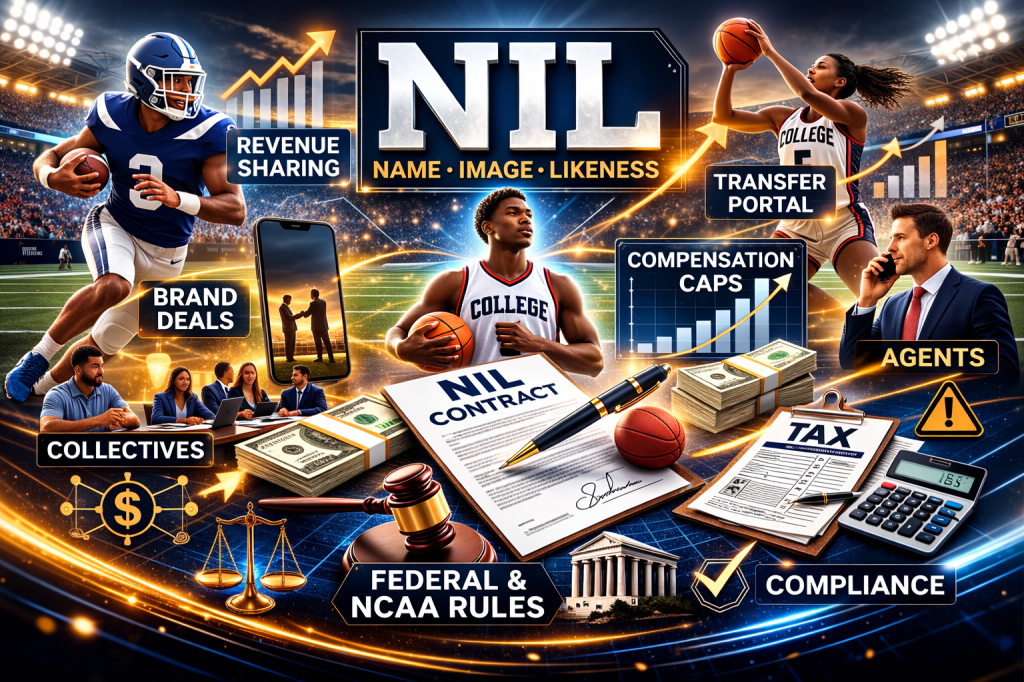
It has been a while since we talked about NIL. Last time I sat down with broadcaster Neil Everett and sportswriter Bill Plaschke about their opinions. Like everything else in the world, it has quickly changed since then.
About two months into 2026, we have seen a few changes. NIL started as what seemed to be a free for all. Now colleges must treat NIL not as a peripheral student issue. They need to treat it as a core compliance and governance concern that impacts the student athletes.
Likewise, revenue-sharing, which is now a major element of compensating players. You might be confused about what that actually does for athletes. Let’s break it down: Revenue-sharing means the school itself shares institutional revenue directly with the athletes. Up till this point, all NIL revenue athletes were getting their money from third-party endorsements, such as brand deals and sponsors. But now all players benefit, whether they have a sponsor deal or not. That’s the advantage of revenue-sharing.
As an Oregon student I am going to break it down using Oregon football as an example. Oregon football makes hypothetically $100M. Players get scholarships and TV money stays with the school. Now, Oregon makes $100M and distributes a portion of that revenue directly to the players.
Imagine you are forming a startup company. At first, employees get a salary (scholarship). The company then gets the influencers to market the company on social media and drives their viewership, boosting TV revenue. Now with revenue-share being a requirement, the company now must give employees a share of the profits.
But these are two different incomes. They are not combined in any way. So, another Oregon example: The star QB at Oregon signs a deal with Nike, local dealerships, and a trading card company. That money comes from those outside brands. Now in addition to those deals, Oregon can pay him directly from the athletic department revenue that comes from TV money, ticket sales and concessions.
The breakdown for the QB might look like this:
$1M from NIL deals and $500K from the school’s revenue share. Two separate income streams.
Want to learn more about revenue sharing? Check out this link to an article that breaks it down even more and has charts for those of you who like visuals.


Leave a Reply